Haile Selassie’s Vision and the Rise of GERD
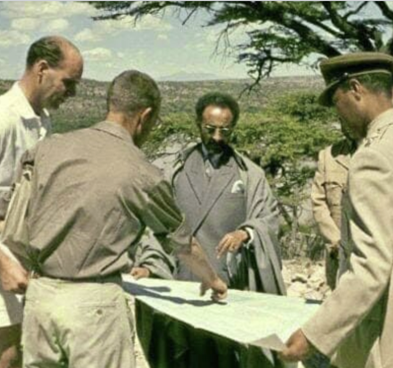
Haile Selassie
Emperor Haile Selassie expressed his vision for Ethiopia’s water resources in a 1957 statement, emphasizing the nation’s duty to develop its rivers for its own people: “However generously Ethiopia may be prepared to share this tremendous God-given wealth of hers with friendly neighboring countries, it is Ethiopia’s primary and sacred duty to develop her water resources in the interest of her own rapidly expanding population and economy.”
While he did not live to see the construction of the Grand Ethiopian Renaissance Dam (GERD), he foresaw the need for such a project and entrusted future generations with the task. His recognition of the Blue Nile’s potential, including initiating a U.S. Bureau of Reclamation study in the 1950s and 1960s, laid the groundwork for the dam’s eventual realization. Though the project was not completed during his reign, his words became a foundational part of Ethiopia’s national narrative around water sovereignty and development.
In the late 1950s, particularly around 1957–1958, Emperor Haile Selassie articulated a vision to modernize Ethiopia by harnessing its “God-given” water resources, specifically for agricultural irrigation and hydroelectric power to support a growing population. He asserted Ethiopia’s sovereign right to develop the Nile, commissioning studies for dams despite external geopolitical pressures.
Haile Selassie emphasized that Ethiopia had the right to utilize its rivers, particularly the Blue Nile (Abbay), for national development, declaring, “We will carry out the project with our own resources, and it will be under the sovereign control of Ethiopia”. In a 1958 address, he highlighted that the, “…rivers of Our country be devoted to irrigation, so that the food needs of Our ever-growing population will no longer be left [to chance/drought]”. He initiated the “Ten Million Dollar Project” to develop hydroelectric power, aiming to transform Ethiopia into a modernized state. While acknowledging the potential to share water with neighbors, he stated that Ethiopia’s primary duty was to its own population and economic development. Although his plans were initially thwarted by lack of funding and international opposition, Selassie established the foundational policy and technical studies (via the U.S. Bureau of Reclamation) that eventually paved the way for projects like the Grand Ethiopian Renaissance Dam (GERD).
GERD represents a new paradigm in mega-dam engineering: combining fast-track RCC construction, open-data satellite monitoring, and ecosystem-based sediment management, but also presents transboundary geohazard and operational risks requiring enhanced regional cooperation.
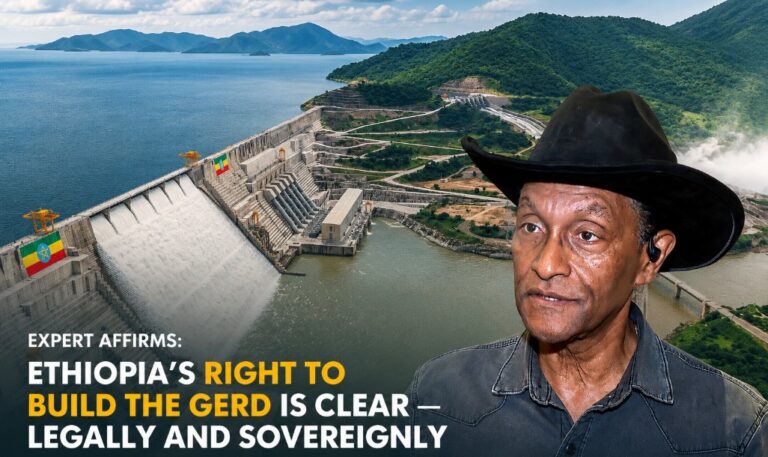
The GERD is a technical marvel. It is 145-meter-tall roller-compacted concrete (RCC) gravity dam with a 5.2-kilometer concrete-faced rockfill (CFRD) saddle dam, forming a reservoir with a total capacity of 74 billion cubic meters (BCM)—including 59.2 BCM of active storage and 14.8 BCM of dead storage. The dam’s design integrates advanced construction techniques, including on-site concrete batching plants, conveyor systems, and thermal control.
It has state-of-the-art safety and monitoring technology. It uses digital twin and survey integration monitoring system which uses satellite remote sensing, airborne LiDAR, UAV photogrammetry, and a custom “Giraffe” pole-camera technique for centimeter-precision inspections. Over 12 km of distributed fiber-optic cable embedded in the RCC provides real-time data on curing temperature and detects early seepage via thermal anomalies. It has satellite radar interferometry (DInSAR) to detect non-uniform subsidence (up to 40 mm) and localized deformations, particularly near the saddle dam, linked to underlying geology and fault systems.
Hydrological modeling (using CHIRPS rainfall data and HBV-light models) indicates GERD retained 14% of inflow in July 2020, 41% in July 2021, and 37–32% in July–August 2022, with annual retention rising to 12.9–13.7% by 2022.
The GERD reservoir is designed to trap 100 years of sediment inflow using 14.8 BCM of dead storage. However, sediment yields may exceed projections (up to 287 million m³/year), prompting a watershed-level strategy—including reforestation, terracing, and cut-and-carry livestock systems—to reduce erosion at source.
The GERD has three spillways ensure safety: a main gated spillway (14,700 m³/s), an ungated ogee crest (2,800 m³/s), and an emergency side-channel spillway, with a Probable Maximum Flood (PMF) design capacity of ~30,200 m³/s.
The GERD’s power generation is 13 Francis turbines (11 × 400 MW, 2 × 375 MW) providing 5,150 MW installed capacity, with planned annual output of ~15.8 TWh. The grid infrastructure is 500-kV double bus-bar switchyard enables long-haul power export to Sudan, Kenya, Djibouti, and beyond, supporting regional energy trade.
Drought Response: Operating GERD at 625 m during droughts worsens water deficits at Egypt’s Aswan High Dam (AHD), increasing deficits from 38.8 BCM to 63.5 BCM and reducing AHD hydropower by 3,041 GWh/yr (~$70M/yr loss). Lowering GERD’s operation level to 595–620 m during droughts is recommended to mitigate downstream impacts.